Styles & Performance
Two great traditions, and the anatomy of an all-night show.
Yakshagana has two principal stylistic traditions, marking its geographical divisions: Badagutittu (the northern style) and Tenkutittu (the southern style). They differ in dance, drumming, costume and temperament, yet both share the same beating heart of song, rhythm and improvised debate.
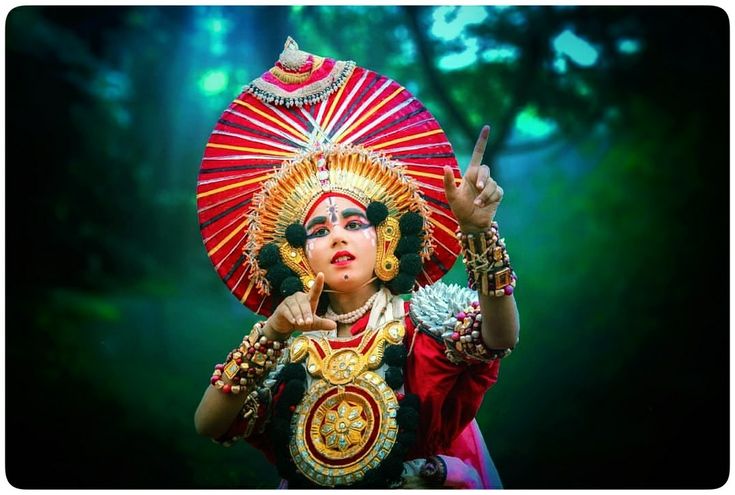 Battle scene
Badagutittu, the northern style
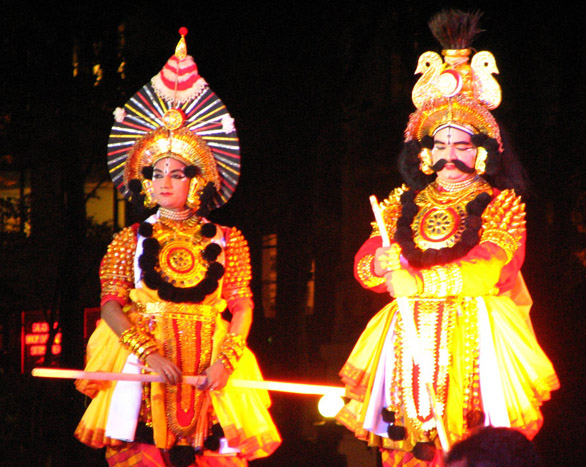
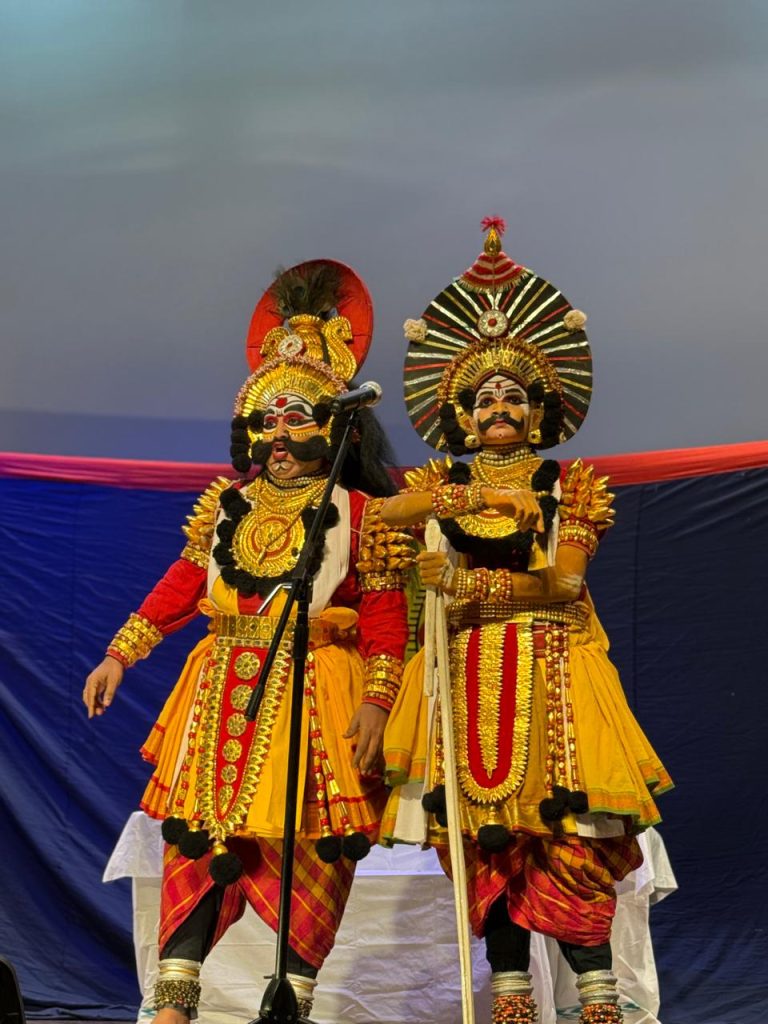
Prevalent in the northern coastal region (from Uttara Kannada through northern Udupi, the belt that includes Kundapura) the Badagutittu style places special emphasis on facial acting, dialogue, and songs timed to dramatic moments. Its narrative manner is calmer and more measured. It uses the Karnataka-style chande (a tall barrel drum) and features distinctive character crowns, including the famous mugga headdresses.
Tenkutittu, the southern style
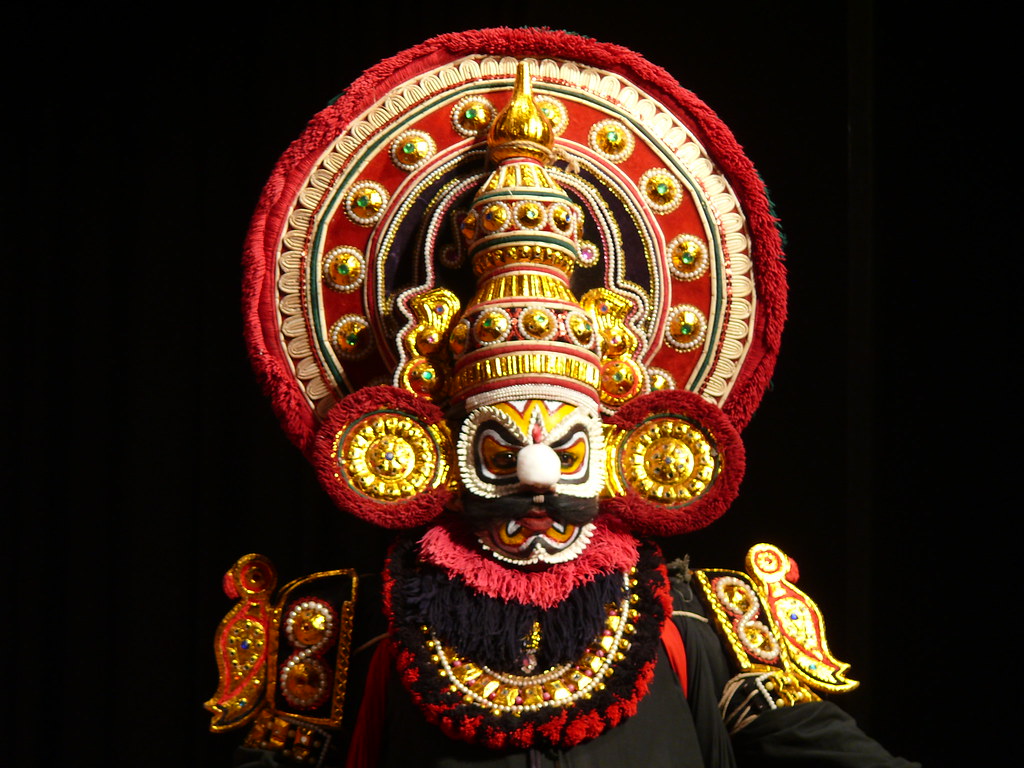
Widespread across the southern coast (Dakshina Kannada, Kasaragod and parts of Udupi) the Tenkutittu style carries a strong Carnatic music influence and a more dynamic dance framework, prized for its leaps and athletic movement. Its maddale drumming differs notably, and it uses a vivid three-part colour system for its characters.
The two styles compared
| Style | Region | Performance character | Music & instruments | Costume & makeup |
|---|---|---|---|---|
| Badagutittu | Northern coast (Uttara Kannada, northern Udupi, Kundapura) | Emphasis on facial expression and dialogue; calm narrative style | Karnataka chande; maddale and chande; harmonium | Heroic crown designs, simpler colour schemes; distinctive mugga crowns |
| Tenkutittu | Southern coast (Dakshina Kannada, Kasaragod) | Dynamic dance framework; great skill in leaps and athletic movement | Carnatic influence; special maddale style; jagataala–chakrataala; harmonium & chande | Three colour sets: Rajabanna (red-green), Katubanna (black), Streebanna (green-red) |
| Others (Tula, Nulkuttu) | , | Further sub-traditions with additional classical influences | , | , |
How a night unfolds
A Yakshagana performance is a theatrical institution, and its structural unit is the mela (troupe). A mela typically includes around twenty artists, along with the Bhagavata, who manages the song and the accompanying music from a raised bench. Roughly 25–30 professional and over 500 amateur melas are active in Karnataka, touring continuously from November to May once the monsoon ends.
At the start, the Bhagavata and musicians take the stage first, offering a Ganesha prayer and other invocations to seek divine approval. Only then do the artists enter. After this benediction comes the Oddolaga, a ceremonial opening in which the Raja (principal character) enters and is welcomed with song. This quiet opening prepares the ground for the conflict and debate to follow.
Once the first scene is established, the lead performs dance and song on stage, guiding both the singing chorus and the audience. Each song closes with a bidtige (a set of specific beats), after which the artists transition in rhythm to the next scene.
For nighttime battle scenes, the music ascends into medium-high registers, creating an immersive atmosphere for the whole mela.
The music of the Himmela
The Raga-Tala system of Yakshagana follows the Prabandha Gana tradition. The melodic mode, the dhati, for each song is loosely derived from classical structures, indicating the sequence of notes rather than fixing it rigidly. A skilled Bhagavata may know over fifty ragas, choosing the dhati that best carries each section of the story.
The core instruments are the chande (the commanding barrel drum), the maddale (a two-faced hand drum), the metallic jagataala and chakrataala cymbals that keep time, and the harmonium, which replaced the older drone pipe to hold the tonal base beneath the Bhagavata's voice.